For overnight issues, start with the support page, then complete the handoff form with the last working state, site contact, and shut-down time. Use the contact form when the corridor is changing venue, brand treatment, or operating window.
Pair this care page with the dispatch notes for transport and queue handling, then check builds if panels, lighting runs, or ballast positions are being altered. Those two references usually answer what changed between pack-in and night watch.
Infinite Corridor usually goes wrong after closing, not during the first photos. The useful care brief covers lens cleaning, mirror-edge protection, fan intake dust, cable isolation, and the point where wind or queue pressure means stopping entries. Write the stop conditions in plain language and keep them with the operator sheet, because Highveld dust, coastal gusts, mall security rounds, and load-shedding all affect this piece differently.
Open with the problem in plain words. If the problem is wind, we keep ballast and cut-off on the same brief. If the problem is dust, we publish the seal card. If the problem is queue psychology, we put lane notes next to the brand moment. Infinite Corridor assumes Highveld dust, coastal wind, mall ops windows, and load-shedding, not a fantasy clean-power stage.
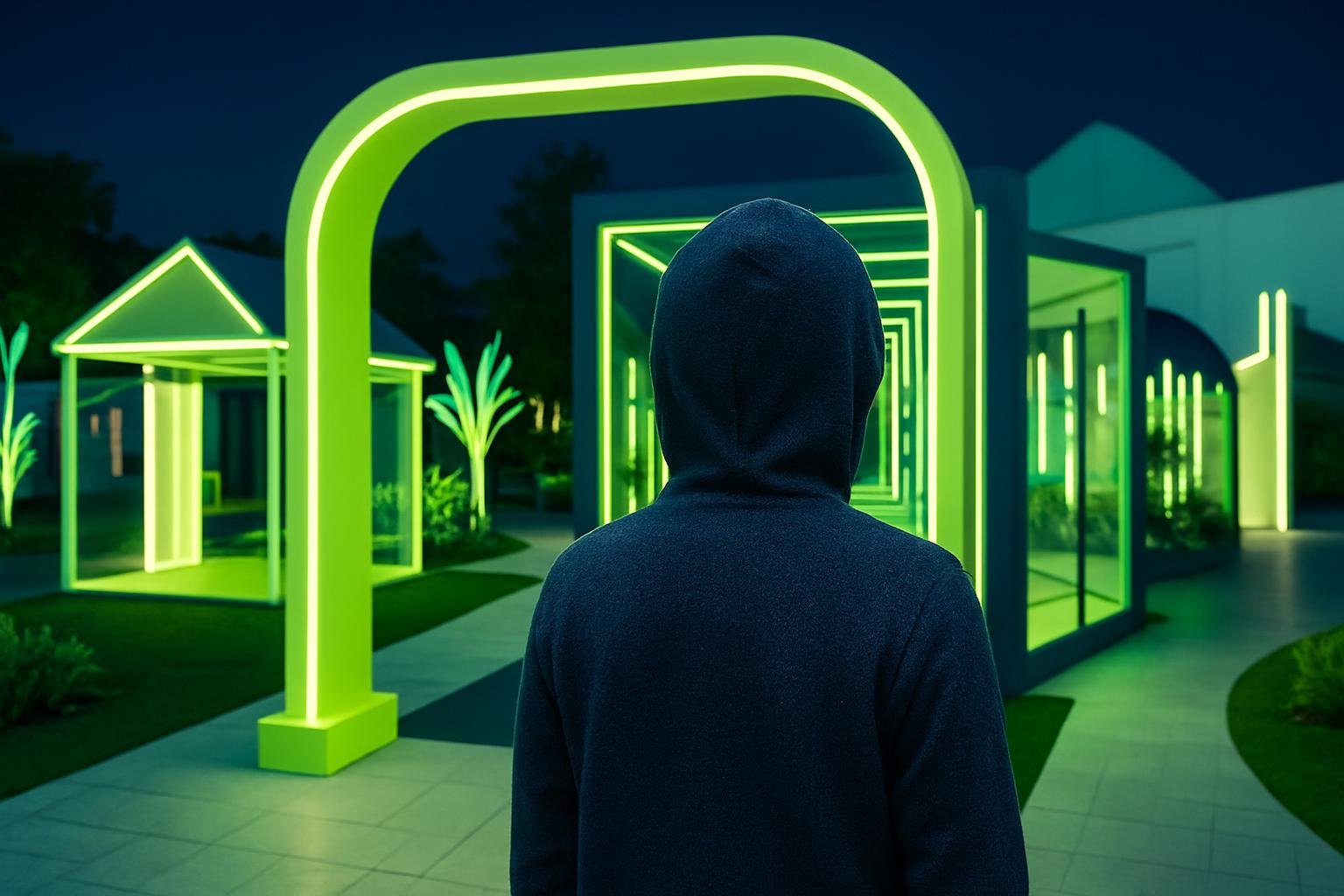
Send a crew lead through the tunnel after dark with the show setting active. Reflections change once public lighting drops, and that is when fingerprints, loose trim, and hot spots become visible. Add the last reset time, cleaning method, and any sensor faults to the handoff note on our contact form so the morning team starts from facts.
Leave the site manager with one overnight routine for Infinite Corridor, not a stack of reading. Include switch-off order, mirror-safe wipe materials, ballast check points, queue barrier positions, and the morning power-up sequence. Keep the printout short enough for a control room wall and specific enough for a shift change at a festival, mall atrium, or retail launch.
Read the activation care sheet alongside the venue playbook before changing staffing or opening hours. Infinite Corridor behaves one way in a wind-exposed forecourt and another way inside a mall with strict trading cut-offs and cleaning crews. Through our contact form, send the main problem, city, venue type, and whether the issue appeared during operation, shut-down, or restart.
Infinite Corridor care in South Africa starts with dust, wind, salt air, and venue rules that shift mid-programme. Acrylic and mirror surfaces mark easily, LED drivers dislike dirty airflow, and public queue behaviour can push a narrow entry point out of alignment. Cleaning, weighting, powering down, covering, and closing off need to be decided before the venue goes dark.
A corridor that ran well at noon can look completely different after a coastal evening or a dry Gauteng day. Shared crews may move barriers, unplug non-essential circuits, or stack cases too close to the entry, so the care note must name exact no-go zones. If the setup is part of a larger festival route, cross-check the dispatch path that matches your environment rather than treating every site like an indoor launch.
Operated by Astros Marketing (Pty) Ltd from 2 Makro Place, Sunnyrock 1401, with reviews at regional appointment suppliers.
Verified Google reviews
Woodstock, Cape Town crews can use our contact form when the corridor needs an overnight owner, a morning reset note, or a strike handoff. Include venue access hours, security sign-out rules, and whether the tunnel sits in a mall, expo hall, or open festival build. Add the main problem first if wind alarms, dusty mirror skins, or queue spill are driving the request.