Venue
Street-scale activations with neighbourly lighting.
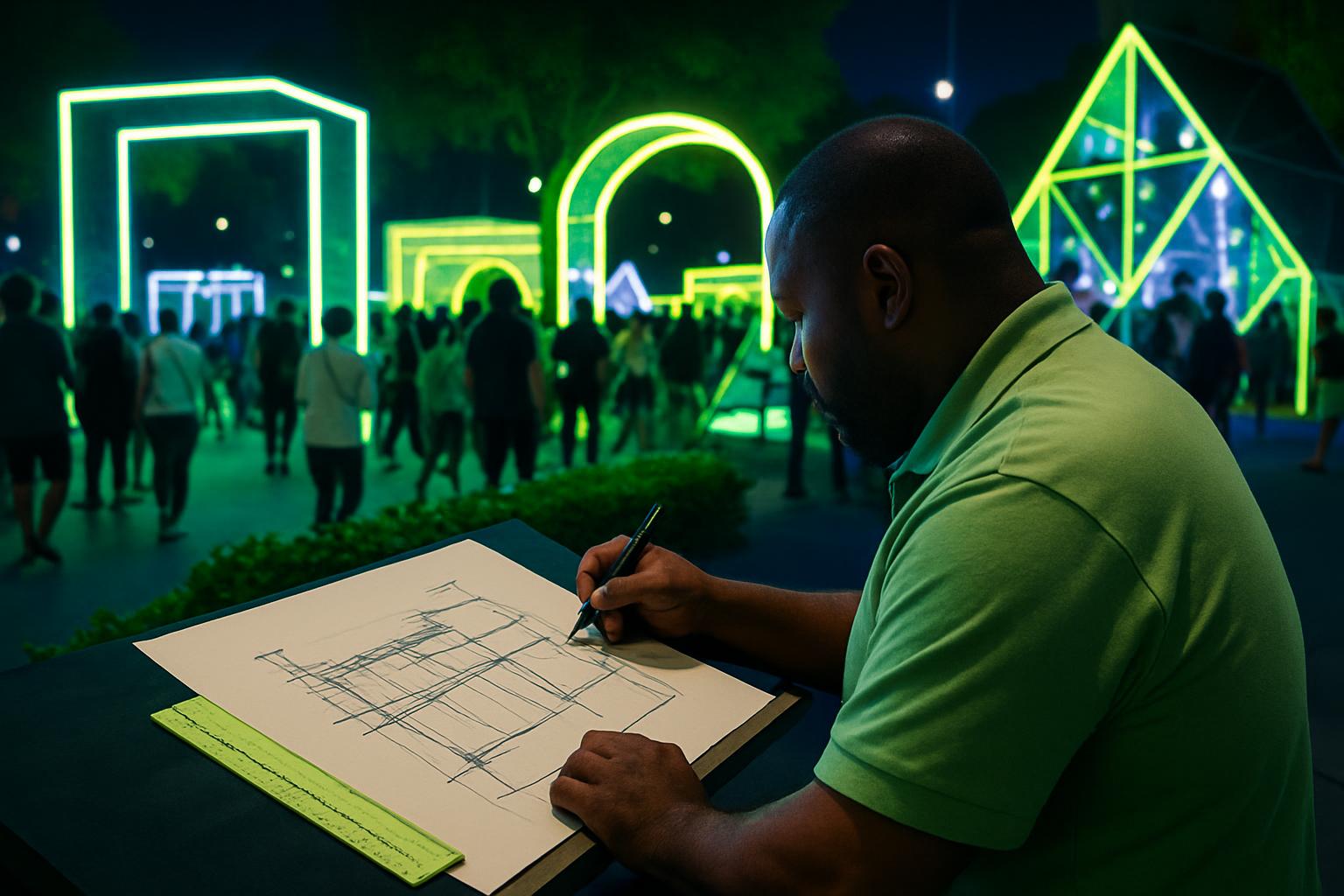
For a township night street, keep dispatch notes beside the route map and power plan, then match resources to kerbside trading, neighbour access, and after-dark visibility. Battery lanterns, cable covers, and low-glare fittings matter more here than oversized scenic pieces. Check taxi stopping patterns, speaker cut-off times, and where security can watch both the queue and the generator.
A Township night street works best when the route feels lived-in rather than overbuilt. We map the greeting point, the lit trading edge, and the photo pocket so a compact crew can install without crowding the lane. Attention goes to warm bulbs, visible wayfinding, and sightlines past stalls, gates, and parked vehicles.
Start with the street edge and mark every driveway, drain, and uneven patch where guests will turn after dark. Then position practical light sources, queue markers, and brand moments around the natural gathering spots instead of forcing a straight procession. Finish with a close check of cable runs, speaker direction, and collection points for bins, stock, and spent promo material.
Township streets change character quickly between late afternoon and full dark. Minibus drop-offs, informal trading, and family foot traffic can squeeze an activation if the first layout ignored the neighbourhood rhythm. During load-shedding periods, battery lanterns and low-draw fixtures matter more than decorative extras, especially where a single power source serves both vendors and event kit.
Each setup should tie one clear activation to one practical note the crew can repeat on site. For this venue, log the street name, nearest landmark, access hour, and whether residents need a knock-and-greet before rigging starts. When you send a brief through our contact form, include the suburb or township, event type, and which lighting, sound, and crowd items are still open.
Supplier teams moving between Woodstock, Sunnyrock, Clearwater, Cresta, Pavilion, Tyger Valley, Baywest, and Riverside need a handover that states lamp types, street width limits, and what remains on site after pack-down. That matters when a retail launch borrows the same look as a festival lane but the public flow is tighter.
This venue goes wrong when the design assumes a blank road with no neighbours, no traders, and no vehicle movement. Trouble also starts when a short retail launch suddenly grows into food service, extra staging, or a second entrance after dusk. Keep the route legible and protect the public edge first.
Wind, dust, and patchy power are the usual stress points after sunset. Add sheltered lamps where gusts run between buildings, avoid low decor that catches grit, and leave enough width for prams, security patrols, and late arrivals. If the activation includes music, angle speakers inward so the street keeps its pulse without turning every housefront into spill.
Send the venue name through our contact form with the township or suburb, event date, and street lighting at dusk. A short note on power access, nearby trading, and expected crowd shape is more useful than a heavy attachment set.
Verified Google reviews
For a Township night street brief, use our contact form and note Woodstock, Cape Town as the studio base. Include the street name, trading hours, and whether vendors, marshals, or nearby homes affect lighting spill and sound direction.