
Wind and ballast card
Ballast and cut-off cues for fabric and arches.
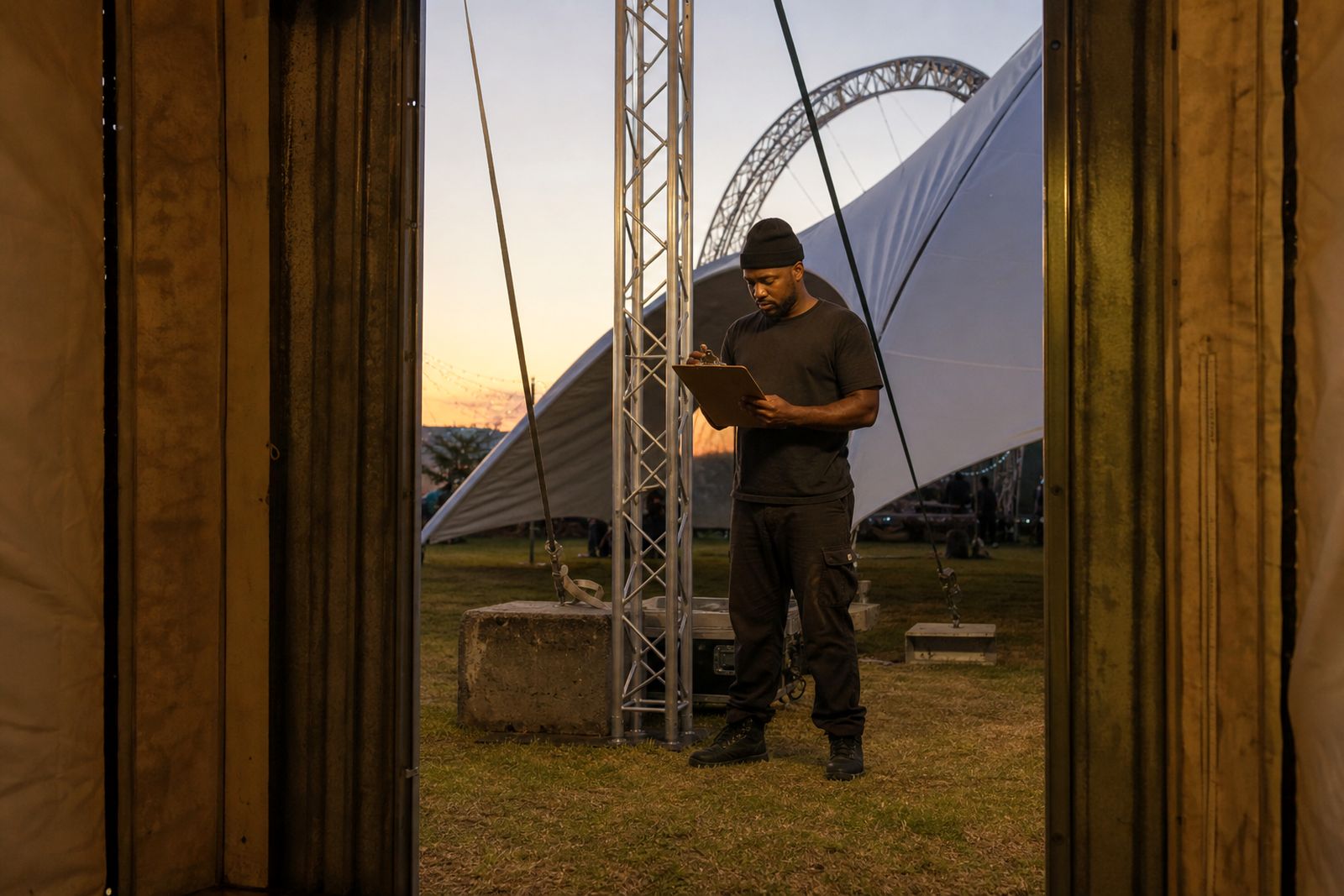
Cut-off cues for branded fabric
This card sits with the site lead, riggers and brand team when gazebos, feather flags, fabric walls or inflatable arches go up. It notes the wind ranges that trigger extra ballast, guy-line checks, or a full stop on use, with space for venue-specific instructions. Keep the latest version on the crew board and share it through our contact form when a centre, school field or festival asks for the safety pack.
Cape Town south-easter days, beachfront promenades and open parking lots all read differently once branding is installed. Use the card to record ballast type, unit weight, anchor points and the person who signed off the setup at first check. If a trading day includes gusty periods, add timed re-checks for legs, base plates, straps and printed skins.
What the card records on site
Each line is there for quick decisions beside a structure, not for office filing. Teams usually capture wind reading, display type, ballast per leg, ground surface and the action required at each threshold. That makes it easier to compare a mall forecourt in Gauteng with an exposed festival field in the Western Cape.
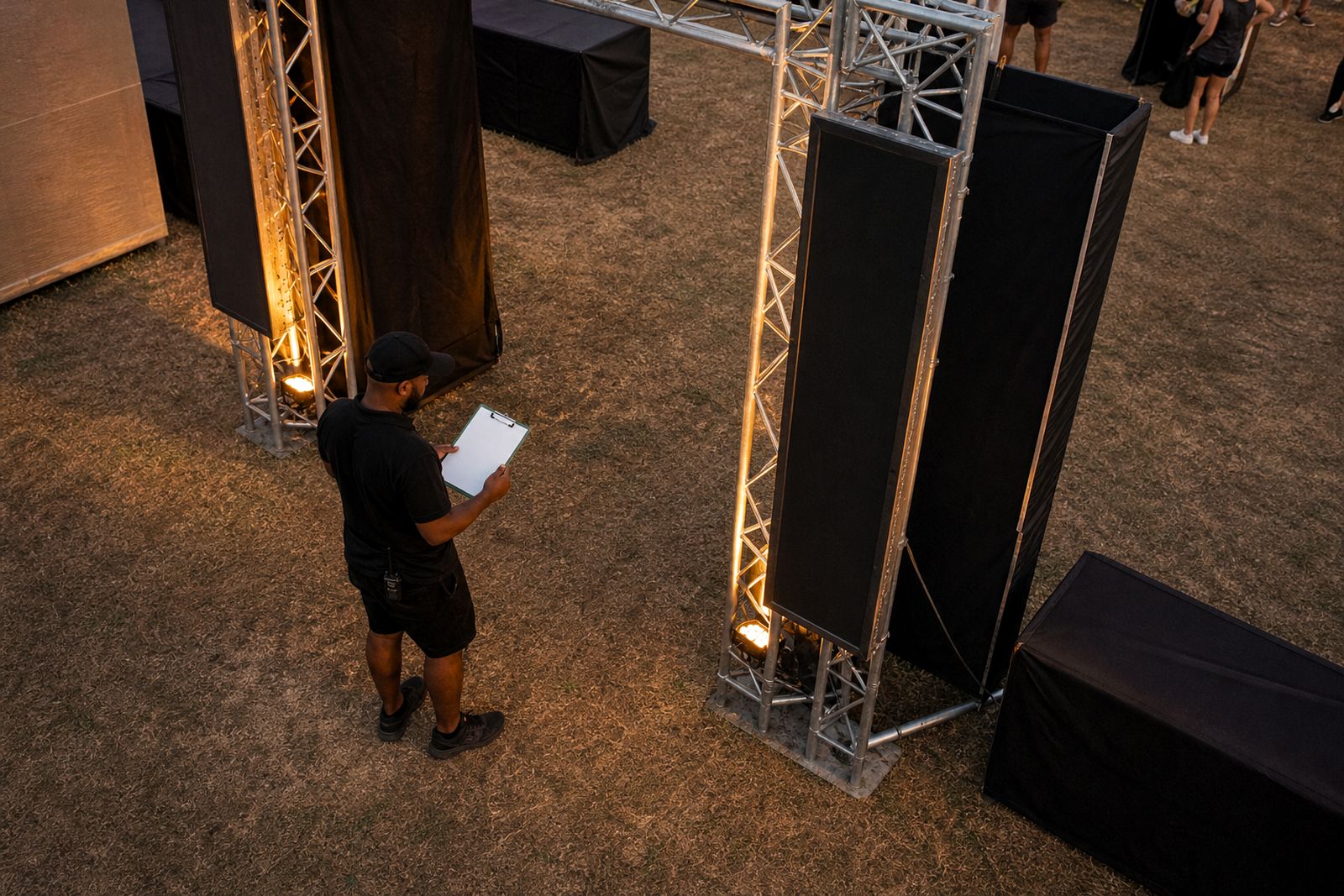
Ballast types used on activations
Ballast queries, tie-down notes, and site-specific wind limits can be sent through our contact form. Astonishing Studio works from Woodstock, Cape Town.
What the card helps crews check
Use the card to match the structure to the day’s wind, the ground under it, and the movement around it. It suits fabric walls, gazebos, feather flags and inflatable arches, especially where people are close and the setup must hold its shape through trading hours, load-in and overnight care.
It also helps teams agree when to add ballast, when to tighten guy lines, and when to stop use until conditions settle. Keep the notes with the crew board so the site lead, riggers and brand team are working from the same cues at the same time.
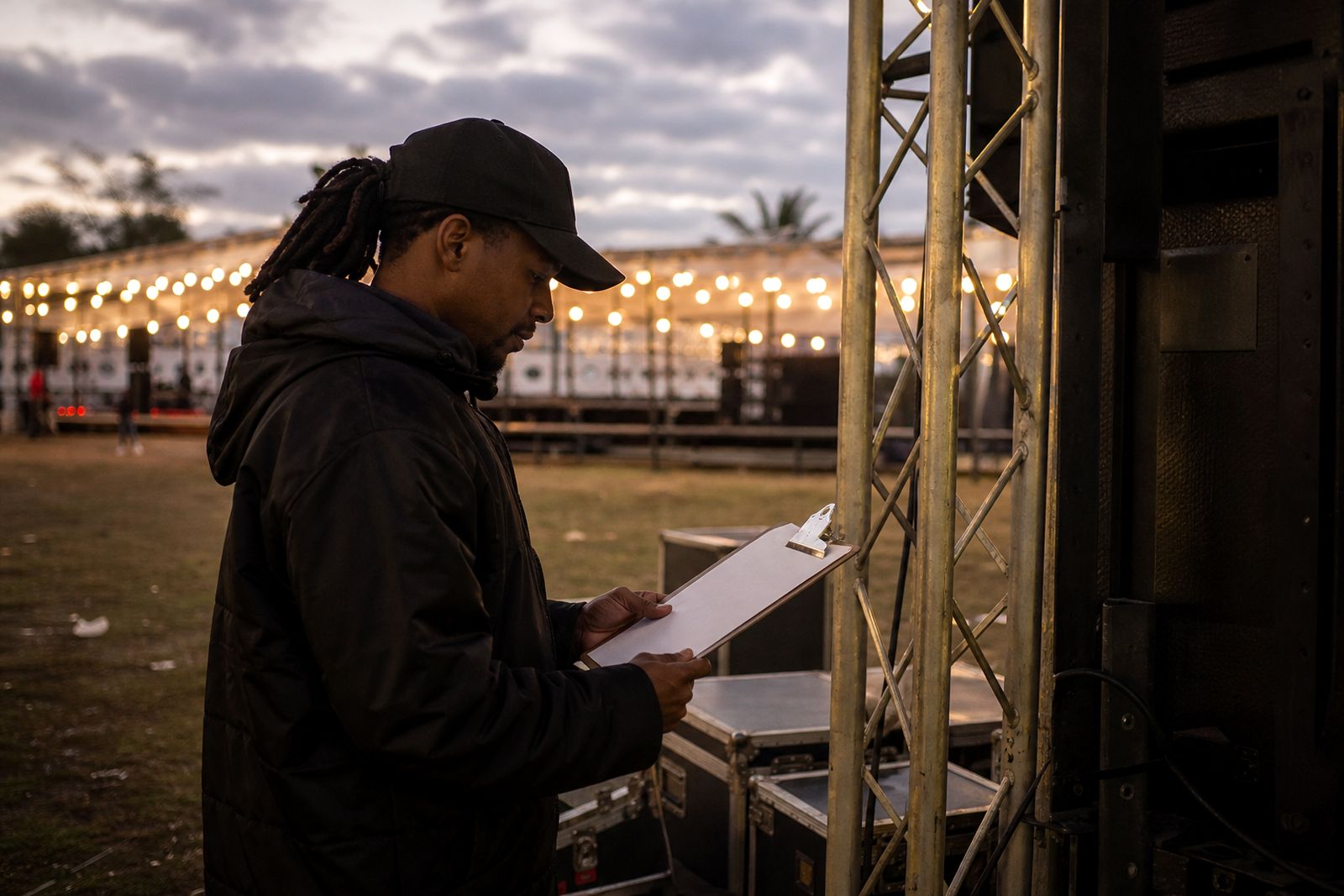
What to record beside the structure
Write the basics in plain language so anyone on site can read them fast. The card is most useful when it notes the wind reading, the display type, the ballast on each leg, and the action needed at each threshold.
- Check the current wind reading before and during install.
- Confirm ballast type, unit weight and anchor points.
- Note the surface under the feet, base plates or pegs.
- Record the person who signed off the first check.
- Add the next re-check time if gusts are expected.
If the setup sits in a mall forecourt, museum forecourt, festival gate or open parking bay, add venue-specific notes so the crew can adjust quickly when the wind changes.
Use it with the wider site plan
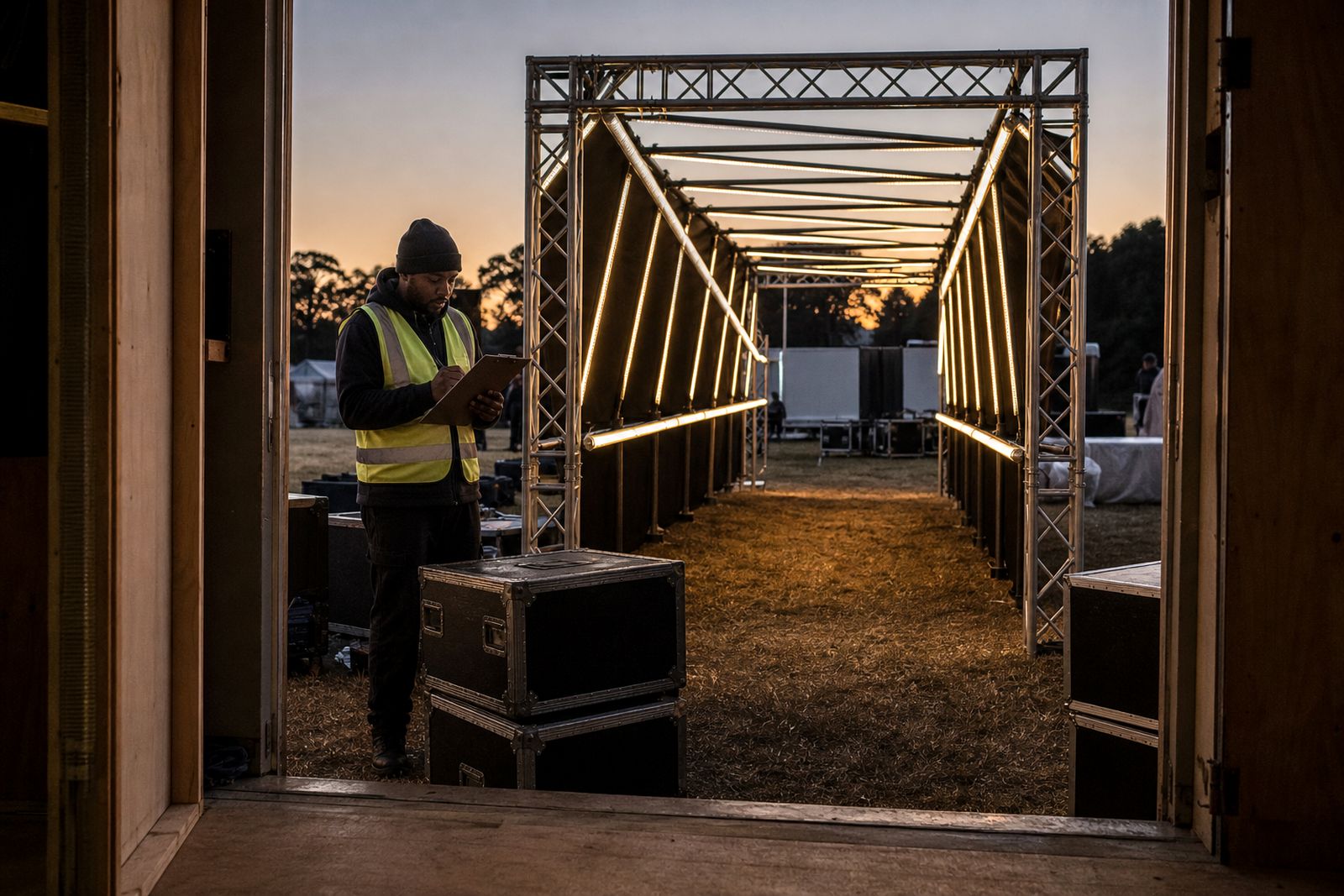
The card works best alongside the venue playbook, load-in and strike window, power plan, and dust and wind protection notes. That matters for walk-through light tunnels, mirror maze installs, lantern fields and ripple pavilions, where the structure, graphics and circulation all depend on steady conditions.
Keep the latest version on site, update it after each check, and send any ballast queries or wind limit notes through the contact form. Astonishing Studio is a South African experiential activation studio based in Woodstock, Cape Town, and operates through Astros Marketing (Pty) Ltd.
What our Brand Activation customers say
Verified Google reviews
Tell us about your activation
Send a note through our contact form with the venue or event, the date, the crowd you expect and the feeling you want, and we will come back with a practical plan and a quote.
Open the contact form